


The Sigma-MT Suite (includes Sigma-MT EA and the Sigma-MT Scanner) is available now for new VIP Cycle Analysts (founding members). Please contact me (on X or Substack chat) once you have joined or upgraded from standard membership to receive the software.
Prerequisites: part six, and the spectrogram and detection guides. You should have the scanner installed and producing results, and you should be entirely comfortable with rank, wavelength and the eight phase states.
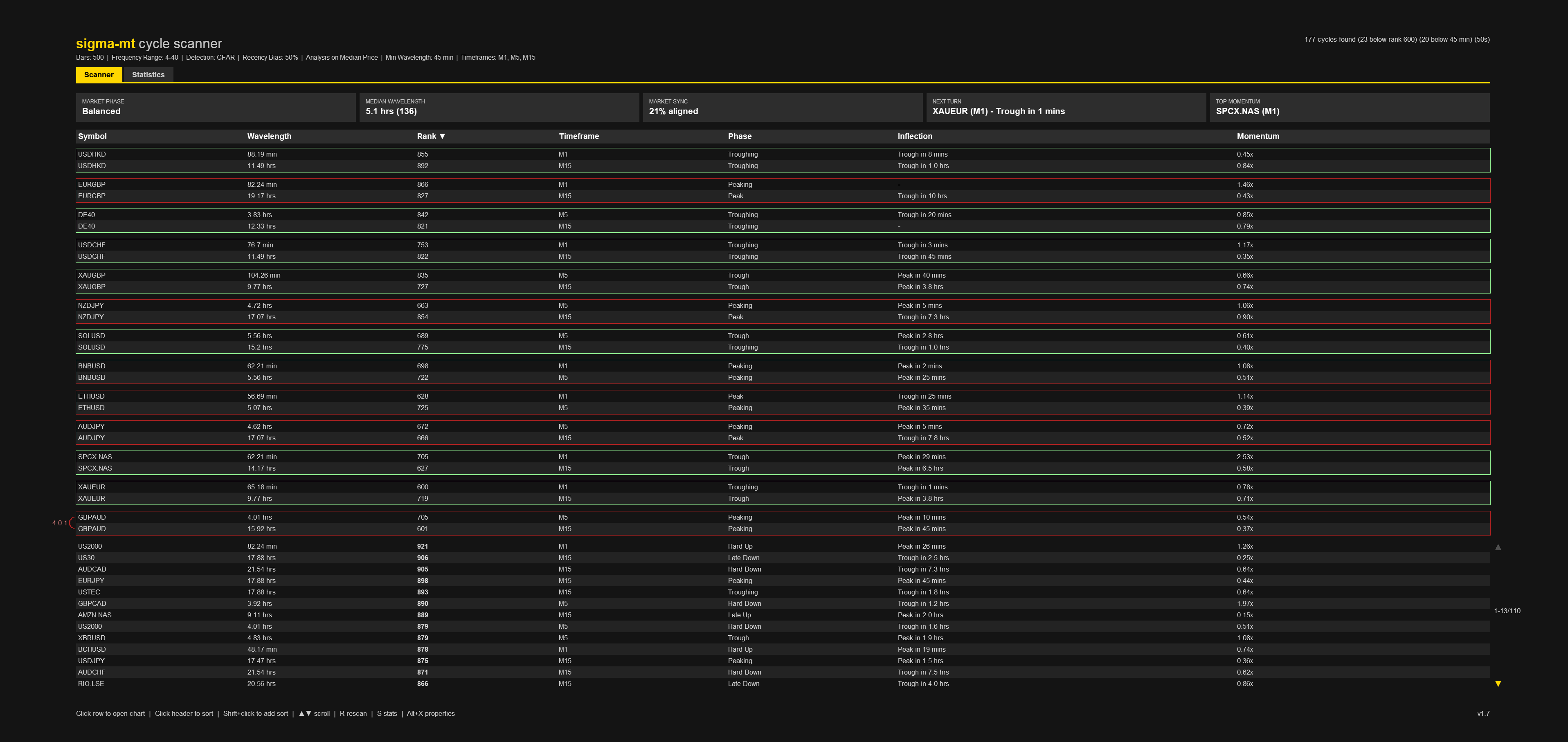
Part six covered the operation of the scanner and left you with a populated results table. This part concerns its interpretation. Two capabilities distinguish the scanner from a conventional screener: it identifies instruments carrying several nested cycles that are turning simultaneously and it tests whether those cycles stand in harmonic proportion to one another. Both require some explanation of what the engine groups together and, more importantly, what it refuses to group.